Your First Pull-Up: A Step-by-Step Plan From Zero to One Full Rep
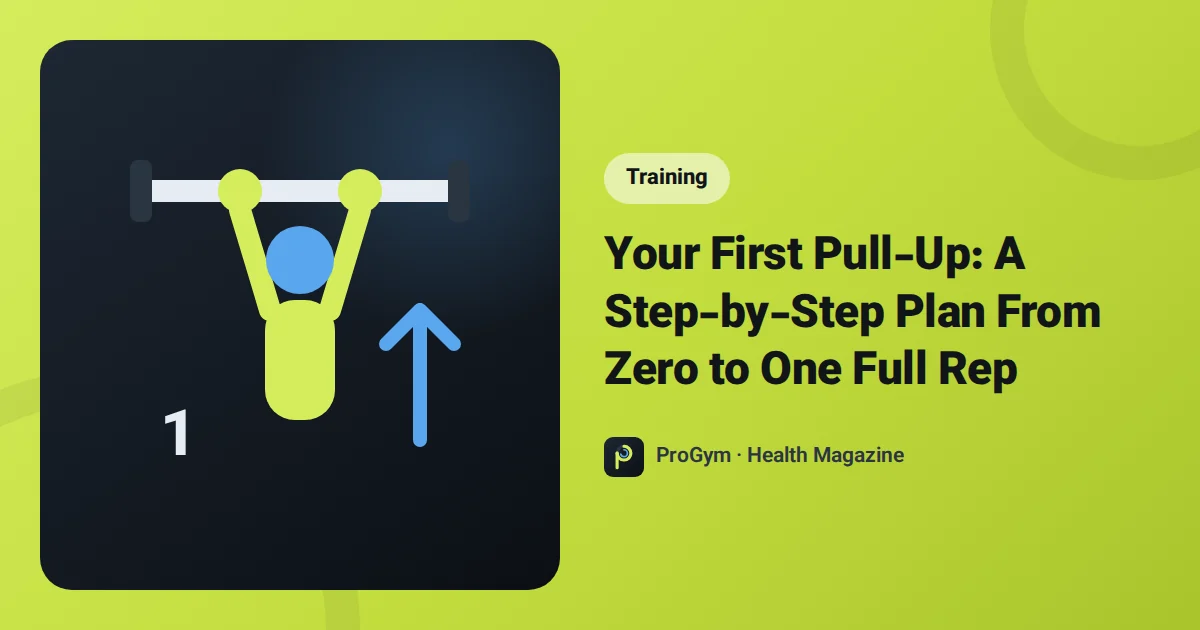
The pull-up is one of the best exercises for your back, biceps and core, yet for many people the first rep feels like a brick wall. The good news is that a pull-up is a skill, and like any skill it comes with the right practice and some patience. Whether you are a man or a woman, young or middle-aged, most healthy people can reach their first full pull-up within a few weeks to a few months on a staged plan.
Why are pull-ups so hard?
You have to lift your entire bodyweight with your upper body. Three things decide how hard that feels:
- Back and biceps strength: the lats and biceps are the main movers.
- Grip strength: if you cannot hold the bar firmly, you will let go before your back is even tired.
- Bodyweight: every extra kilo is extra load. Losing excess fat makes pull-ups easier, but you do not need to wait for that before you start training.
What counts as a full pull-up?
A full rep starts from a hang with your arms almost straight. You pull until your chin clears the bar, without swinging or kicking, then lower yourself under control. The difference between a pull-up and a chin-up is the grip. On a chin-up your palms face you and the biceps help more, which is why most people get their first rep on that version.
Before you start: a quick test
Try these three things to find your starting stage:
- How many seconds can you hang from the bar with straight arms?
- How many inverted rows can you do with a straight body?
- Can you lower yourself slowly from the top of the bar (using a box to get up) over 3 to 5 seconds?
If you hang for less than 20 seconds, start at stage 1. If hanging is easy but a controlled lowering is not, start at stage 2. If you can already lower yourself for 5 seconds, go straight to stage 3.
Stage 1: hangs and scapular pulls (2 to 3 weeks)
The goal is to strengthen your grip and learn to control your shoulder blades.
- Dead hang: 3 rounds, each as long as you comfortably can (target: 30 seconds).
- Scapular pull-up: hang, then without bending your elbows lift your body a few centimetres just by pulling your shoulder blades down. 3 sets of 8 to 10.
- Inverted row on a high bar (body fairly upright): 3 sets of 8 to 12.
Stage 2: basic back strength (2 to 4 weeks)
- Lat pulldown: 3 sets of 8 to 12, adding a little weight each week.
- Inverted row with a more horizontal body: 3 sets of 6 to 10.
- Dead hang: 2 rounds of up to 45 seconds.
Training at home without a machine? Swap the lat pulldown for a band lat pulldown or inverted rows under a sturdy table.
Stage 3: negatives and band-assisted pull-ups (3 to 6 weeks)
This is the heart of the plan because you are practising the real movement.
Negative pull-ups
Use a box or a small jump to get to the top position with your chin over the bar. Now lower yourself as slowly as you can, aiming for 3 to 5 seconds. At the bottom, step back up and repeat. 3 sets of 3 to 5 reps is enough. Negatives are very fatiguing, so more is not automatically better.
Band-assisted pull-ups
Loop a resistance band over the bar and put a knee or foot in it. The band helps most at the bottom, which is the hardest part. Do 3 sets of 5 to 8 band-assisted pull-ups, and whenever you hit 8 clean reps with one band, move to a thinner one. In the gym, an assisted pull-up machine does the same job.
Stage 4: your first full rep
Once you can string together several 5-second negatives and do 5 reps with your thinnest band, it is time to test. At the start of a session, after warming up and while you are fresh, try one full rep. If it does not happen, do not be discouraged: keep running the plan for another two weeks and test again.
After your first rep, build up with short sets, for example 5 sets of 1 rep with full rest, then gradually move to sets of 2 and 3.
A sample week
Two to three sessions a week with at least a day between them is enough. A sample stage 3 session:
- Warm-up: 5 minutes of easy cardio, arm circles and 2 light sets of scapular pulls.
- Negative pull-ups: 3 sets of 3, resting 2 minutes.
- Band-assisted pull-ups: 3 sets of 6.
- Inverted rows: 2 sets of 8.
- Dead hang: 2 rounds, as long as you can.
- Plank: 2 holds of 30 seconds to keep your body tight on the bar.
Build these exercises in the ProGym program builder so the Companion Coach counts your sets and rest for you and logs your progress every week.
Common mistakes
- Swinging and kicking: it may get you one more rep, but it does not build real strength and it stresses the shoulders.
- Half reps at the bottom: start each rep with your arms almost straight.
- Training every day: muscles and tendons need rest to get stronger. Daily pull-up practice often ends in sore elbows.
- Dropping at the bottom: falling into the hang jolts the shoulders and elbows. Always control the descent.
- A loose body: a slack body swings on the bar. Brace your abs and keep your legs slightly in front of you.
Safety notes
Warm up before every session; our guide to warming up before training can help. If you have a history of shoulder injury, dislocation or elbow pain, talk to a doctor or physiotherapist before hanging from a bar. Sharp pain in the shoulder or elbow means stop, not push through. Only mount a home pull-up bar on a solid frame, and test it before you hang from it.
Bottom line: your first pull-up comes in four stages: hangs and scapular pulls, basic back strength, negatives and band-assisted reps, and finally testing a full rep. Two to three sessions a week, patience and tracking your progress will help more than any trick.
Frequently asked questions
How long does it take to get my first pull-up?
It depends on your starting strength and bodyweight, but for most healthy people it takes a few weeks to a few months. With two to three regular sessions a week and tracked progress, you usually see a clear change every month.
Are chin-ups easier than pull-ups?
For most people, yes, because the biceps help more. You can get your first rep as a chin-up and then work toward the overhand pull-up.
Can women do pull-ups?
Yes. Women reach a full pull-up with the same staged plan; it may take a little longer, but the path is the same.
What should I do if my elbow hurts during pull-ups?
Stop and give it a few days of rest. If the pain continues or is severe, see a doctor or physiotherapist. Training less often and warming up thoroughly usually helps.
Workout and nutrition plans matched to your goal and level, free.